The Unyielding Spirit of the International Scout: A Deep Dive into an Off-Road Legend
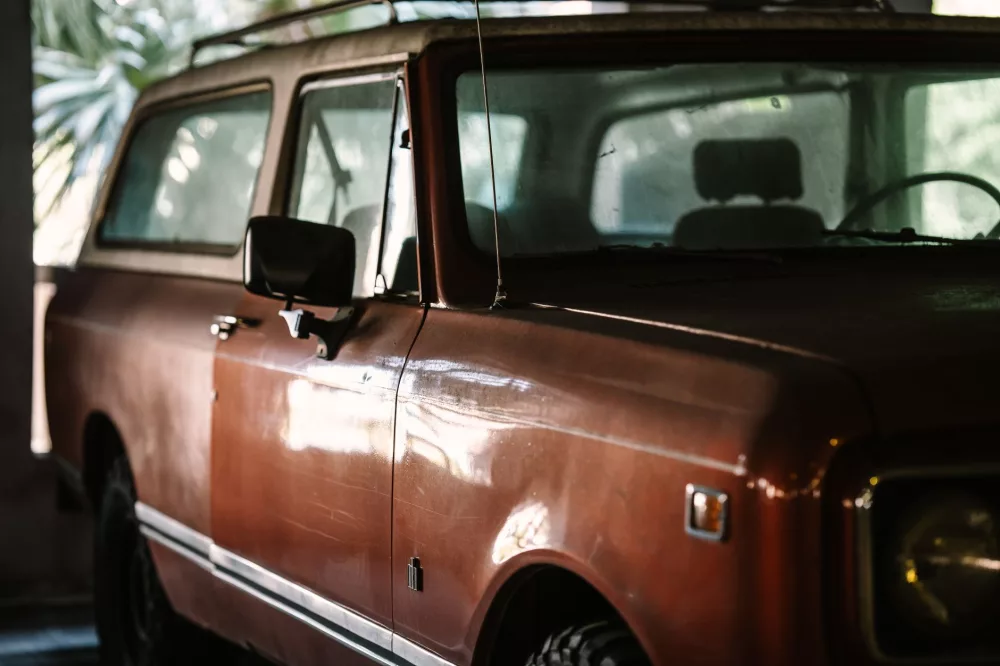
Introduction to the International Scout: A True American Original
When we talk about classic American off-road vehicles, a few names immediately spring to mind, don't they? You've got your Jeeps, your Broncos, and then there's the International Scout. For me, the Scout holds a really special place because it wasn't just another vehicle; it was a bold statement from a company primarily known for farm equipment and trucks. International Harvester, or IH as many of us lovingly call them, saw a gap in the market in the early 1960s, a spot where a versatile, rugged, and relatively affordable utility vehicle could thrive. They weren't just playing catch-up; they were setting a new standard for what a multi-purpose vehicle could be. I've always admired that pioneering spirit, the willingness to try something different.
It's interesting, isn't it, how some vehicles just carve out their own niche? The Scout did exactly that. It appeared before the Ford Bronco and Chevrolet K5 Blazer, making it an early entrant into the burgeoning SUV segment. Today, I want to take you through the incredible journey of this iconic machine, from its rugged beginnings to its enduring appeal with enthusiasts and collectors worldwide. We're going to talk about its design, its various iterations, and why, even after decades, it still captures our imagination.
The Birth of an Icon: Scout 80 (1961-1965)
Let's rewind a bit to 1961. That's when the very first International Scout, the Scout 80, rolled off the assembly line. IH wanted something that could genuinely compete with the Jeep CJ, but they aimed for a vehicle that offered a bit more in terms of comfort and versatility. I think they absolutely nailed it with the Scout 80. Its design was incredibly practical yet charmingly simple. It featured a removable steel top, fold-down windshield, and even removable doors – configurations that made it perfect for both work and play.
- Engine Choices: Most Scout 80s came with the hardy IH 152 cubic inch (2.5L) four-cylinder engine. It wasn't a powerhouse, but believe me, it was incredibly reliable and had plenty of torque for off-road excursions.
- Configurations: You could get it as a soft-top, hard-top, pickup, or even a station wagon. This flexibility was a huge selling point, allowing buyers to really tailor the vehicle to their needs.
- Innovative Features: For its time, things like an optional PTO (Power Take-Off) for running farm implements were pretty revolutionary for a consumer-level vehicle. This really speaks to IH's roots, doesn't it? They understood utility like no one else.
My impression is that the Scout 80 laid a solid foundation. It proved that IH could build a tough, reliable, and adaptable vehicle that appealed to a broad audience, from farmers to outdoor adventurers. It wasn't flashy, but it was honest, and I think that's why it resonated so much.
Evolution and Refinement: Scout 800 (1966-1971)
Building on the success of the 80, International Harvester introduced the Scout 800 in 1966. This wasn't a radical redesign, but rather a thoughtful evolution, addressing customer feedback and incorporating modern features. They made subtle styling tweaks and, crucially, introduced more engine options, which I think was a smart move. Buyers wanted more power, and IH delivered.
- New Engine Options: This is where things got really interesting. The 800 series offered the original 152 4-cylinder, but also introduced the 196 cubic inch (3.2L) 4-cylinder, and perhaps most excitingly, the 266 cubic inch (4.4L) V8 and later the 304 cubic inch (5.0L) V8. Suddenly, the Scout had some serious grunt.
- Interior Upgrades: The interior saw improvements too, with better seating, updated dashboards, and more creature comforts, making it a bit more livable for everyday use.
- Styling Cues: Small exterior changes, like new grille designs and taillights, helped differentiate it from its predecessor, giving it a slightly more modern look without sacrificing its rugged appeal.
For me, the Scout 800 represents the maturing of the original concept. It retained all the core strengths while offering more power and comfort, making it even more competitive in a rapidly growing market segment. It was a well-balanced vehicle, really.
The Second Generation: Scout II (1971-1980)
The biggest leap came in 1971 with the introduction of the Scout II. This was a much more significant redesign, moving away from the compact, almost military-style aesthetic of the earlier models towards something larger, more refined, and frankly, more modern. I remember seeing these when I was younger, and they always looked so capable, even just sitting in a driveway. The body was completely new, longer, and wider, offering more interior space and a smoother ride.
- Body Styles: The Scout II was available in a standard two-door hardtop, a removable hardtop (often called a